September 1949
Veterans’ houses, migrant farm workers, war refugees, polio, “Top of the world, Ma”

This post is part of the His Hometown section, an ongoing narrative. Visit the Your Hometown Too site on your browser to explore how the posts fit together.
He didn’t have a name when he was first introduced to the town: “Mr. and Mrs. Douglas Springsteen, 87 Randolph street, are parents of a son born last Friday at Monmouth Memorial hospital, Long Branch.”
His was among six births reported in the Transcript that week – all boys, no wonder the town Little League had to add two teams 12 years later – and 3.6 million in the nation in year four of the postwar baby boom.
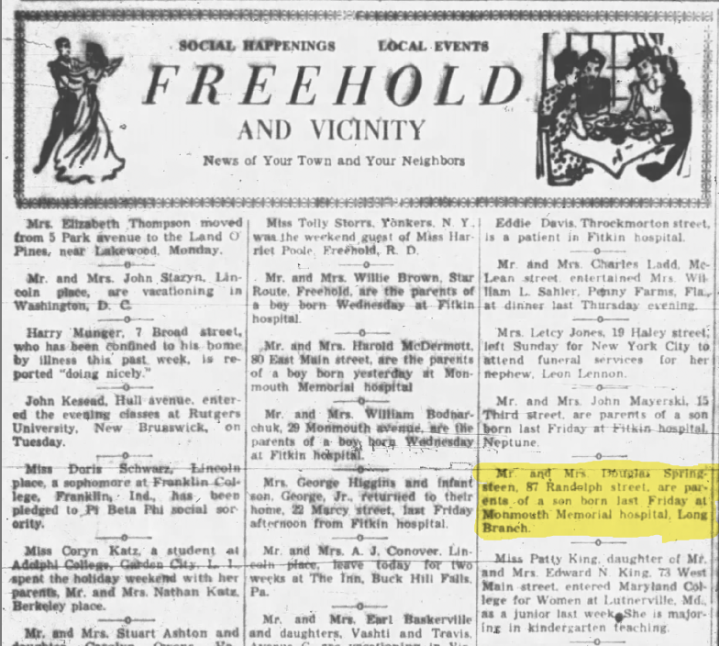
Bruce’s birth announcement appeared in “News of Your Town and Your Neighbors,” a column that filled at least half of one of the paper’s broadsheet pages each week with the kind of news that is now confined mostly to social media. Now, you learn about the people you already know; then, you learned about everybody. Bracketing the news about the new baby on Randolph Street was the news that Mrs. Letcy Jones – wife of the longtime pastor of Second Baptist Church, an anchor of the predominantly Black neighborhood on the west edge of town – attended her nephew’s funeral in New York; and that Patty King – whose father owned the Oldsmobile and Cadillac dealership across the street from the firehouse on Main Street – was a junior at Maryland College for Women, “majoring in kindergarten teaching.”
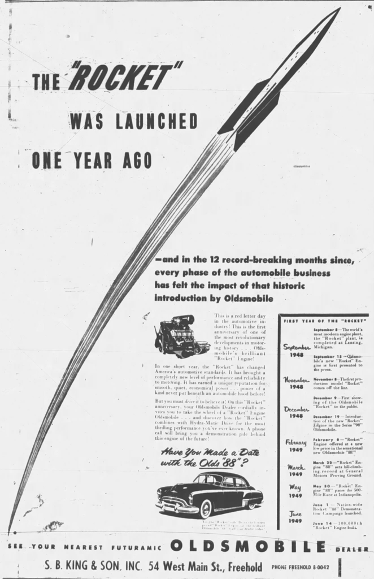
The 1950 models had arrived at the small car dealers around town: Packards on Mechanic Street; Hudsons on Throckmorton; Dodges on Center; Buicks, Oldsmobiles and Cadillacs on Main; Studebakers, Fords and Chevrolets out on Highway 9.
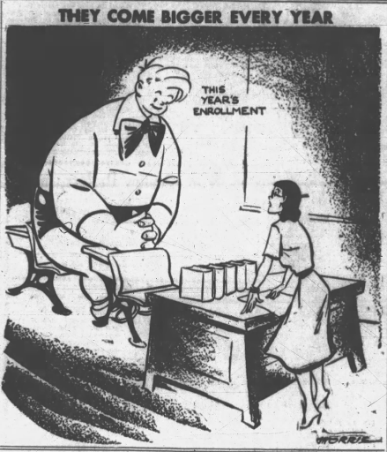
The first baby boomers hadn’t hit kindergarten yet, but the schools were already starting to feel squeezed, and nervously eyeing the years ahead.
The war – the deadliest that humans had ever inflicted on each other, erasing 60 million lives from Earth – was just four years past, and two more refugees from it had arrived in town. They had traveled to New York from the port of Bremerhaven, Germany, with 1,166 other refugees on a U.S. Army transport ship, the General McRae.
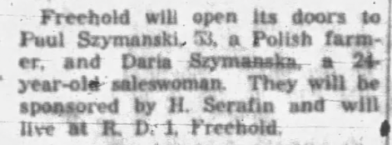
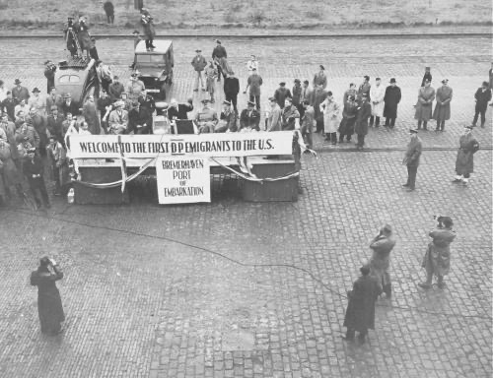
Tens of millions of Europeans had been uprooted by the war, and those who were unable or unwilling to return to their homes – the DP’s, Displaced Persons – languished in resettlement camps until they could be placed in new ones.
“Under the Displaced Persons Act of 1948, the IRO” – the International Refugee Organization of the United Nations – “is authorized to bring to this country 205,000 refugees before June 30, 1950, if it has the necessary assurances that they will not become public charges. The IRO still announced today that it still has more than 600,000 Europeans in DP camps awaiting resettlement and that it has sent out a call for new sponsors.”
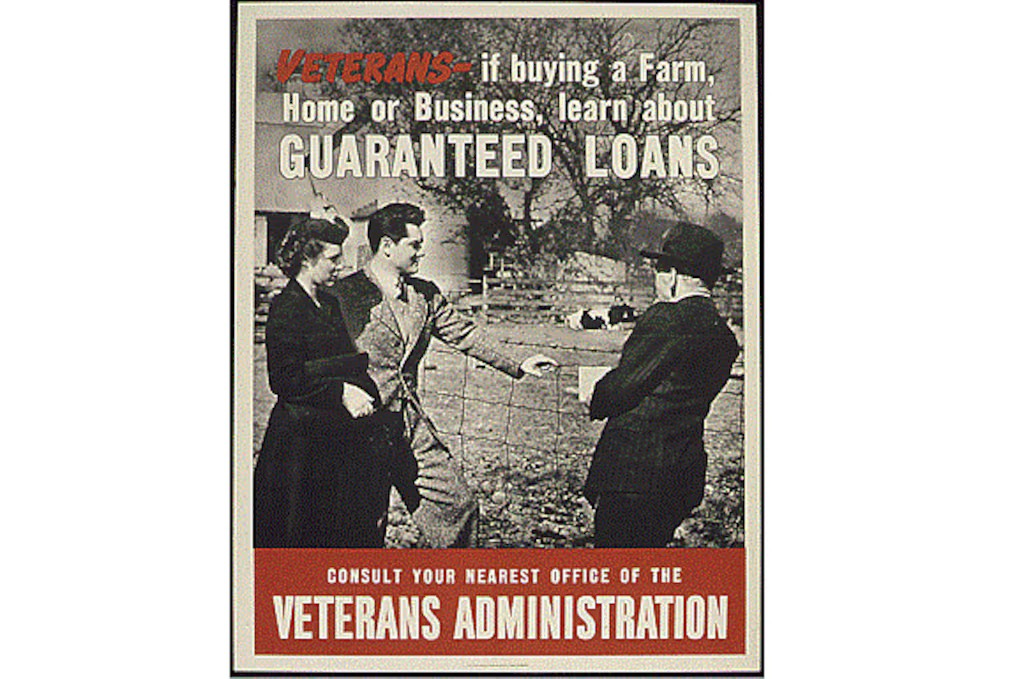
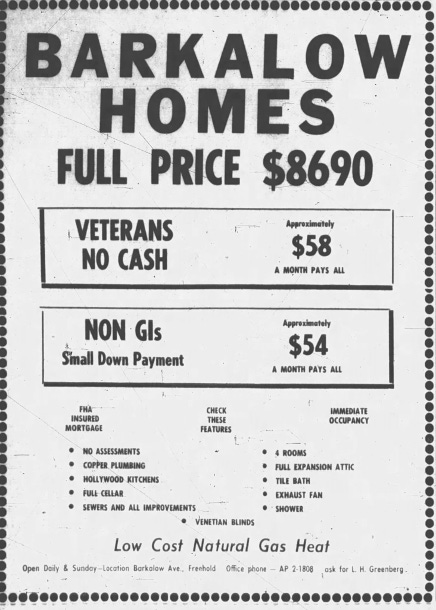
The local veterans of the war sometimes felt a little displaced themselves. Like many other veterans with new babies, Douglas Springsteen was squeezed into his parents’ house with his young family, next door to the convent and church of the St. Rose of Lima Catholic parish. The Depression and the war had stalled new home construction, and builders were just starting to catch up to the huge wave of postwar demand. A street of identical new bungalows was going up on the southern edge of town – just four rooms each, but with a “full expansion attic” that could turn into another bedroom or two when the next babies arrived. The G.I. Bill signed by President Franklin D. Roosevelt five years earlier – just two weeks after the Allies had landed on the beaches of Normandy – offered a federal loan guaranty that made it easier for veterans to buy homes. Veterans buying one of the Barkalow Homes had to put no cash down.
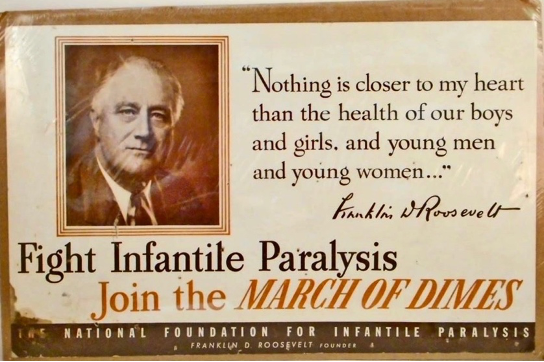
Polio, the disease that withered Roosevelt’s legs, had surged in the county over the hot, humid summer, about eight new cases each day in July – a higher rate than any other New Jersey county, more than double the previous year – but as the weather cooled, the daily average dropped to one.
“Infantile paralysis has thrust itself upon our people throughout our nation with great violence. It is about to exceed the 1916 record year and is bringing tragedy into the lives of thousands of helpless boys. girls, men and women,” said the chairman of the county chapter of the National Foundation for Infantile Paralysis, a nonprofit founded by Roosevelt and better known as the March of Dimes.
One of the new cases was William Franklin, whose grandmother baked a cake for his 19th birthday, which he celebrated in Monmouth Medical Center in Long Branch, the hospital where Bruce was born.
“He can now move his right leg, and he walked Sunday, with the help of nurses, to the window.”
“False rumors that the young man would have to burn his clothes because of the disease started two benefits around the neighborhood where he resides. Last week Wednesday and Thursday a group of youngsters with whom he played raised about $13 to defray the cost of a new outfit. It has since been decided to make him a present of the money when he returns home.”
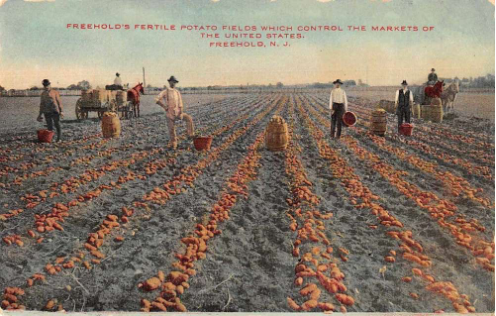
“Up to the town’s very doorstep spread the fields and woodlands of the gently rolling land of Monmouth County, the second richest agricultural county in the United States.”
The WPA Guide to New Jersey (1939)
Every summer those fields filled with migrant workers – African-Americans from the South mostly, but lately some Puerto Ricans, too – who followed the harvest north through the farms and orchards of the Eastern states. They lived mostly in clusters of small shacks on the farms that surrounded the town in every direction. Fred Springsteen – “master of the art of electricity,” as his grandson, Bruce, described him in an early unreleased song, “Randolph Street” – traveled out to the migrant camps to fix the workers’ radios.
The town alternated between paternalism and disdain for this annual influx. The Freehold Migrant Family Center had just ended its third season of providing health and social services for migrant workers and classes for their children, a joint project of the New Jersey Department of Labor and a local committee led by the Rev. Bernard Garlick, pastor of St. Peter’s Episcopal Church. Its home was in the Court Street School, which until just two years earlier, when the new state Constitution outlawed segregation, was the elementary school for the town’s Black children. “Freehold is gaining national recognition for its pioneering work with the Family Center,” Father Garlick told the Transcript.

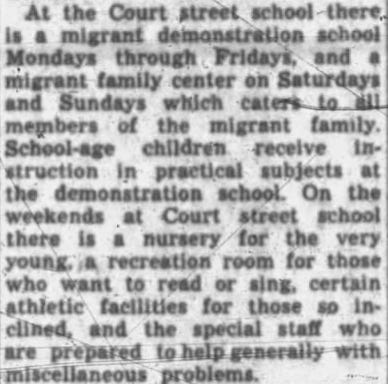
The Transcript applauded the Migrant Family Center in an editorial, but slighted the migrants themselves:
“It is a step in the right direction because, without instruction in matters of health and social matters, the marginal citizen will remain a marginal citizen and a drain upon the taxpayers and a burden to police,” it wrote. “The migrants have been looked upon as a necessary evil and in many cases have done little to ingratiate themselves to the communities they visit.”
A Saturday night visit to town by one migrant had just ended badly:
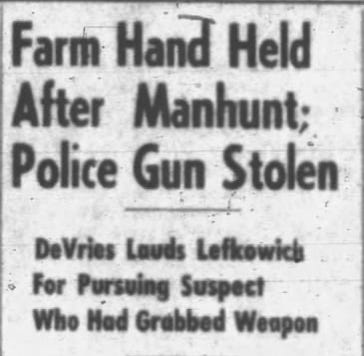
The 31-year-old farm worker from Florida, accused of stealing a car, was captured by Patrolman Henry Lefkowich after a foot chase on Main Street. Lefkowich was leading him to the jail next to the courthouse in the middle of town when:
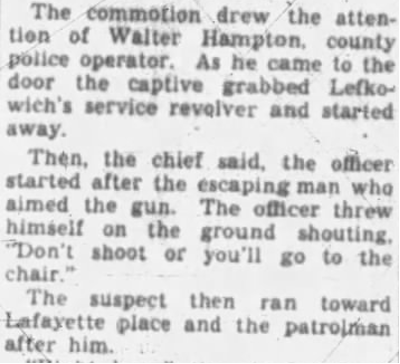
Lefkowich caught up with him at McChesney’s icehouse “and they had a tussle there. Lefkowich made him release the gun but it fell in the bushes. Lefkowich couldn’t find the gun.” The chase continued, through backyards, over fences, until the suspect disappeared into the woods at the edge of town. The state police were called in for the search. About two hours later, at 10 p.m., the suspect was arrested near the farm where he worked, about two miles outside town on Robertsville Road.
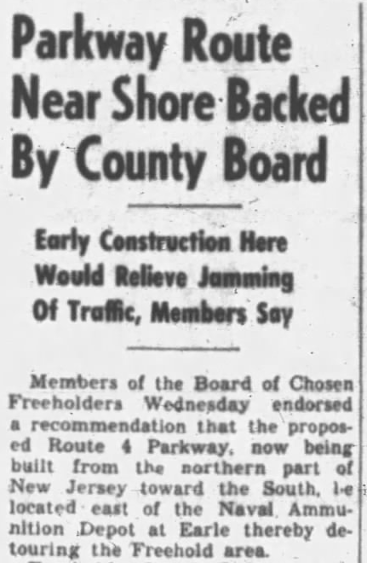
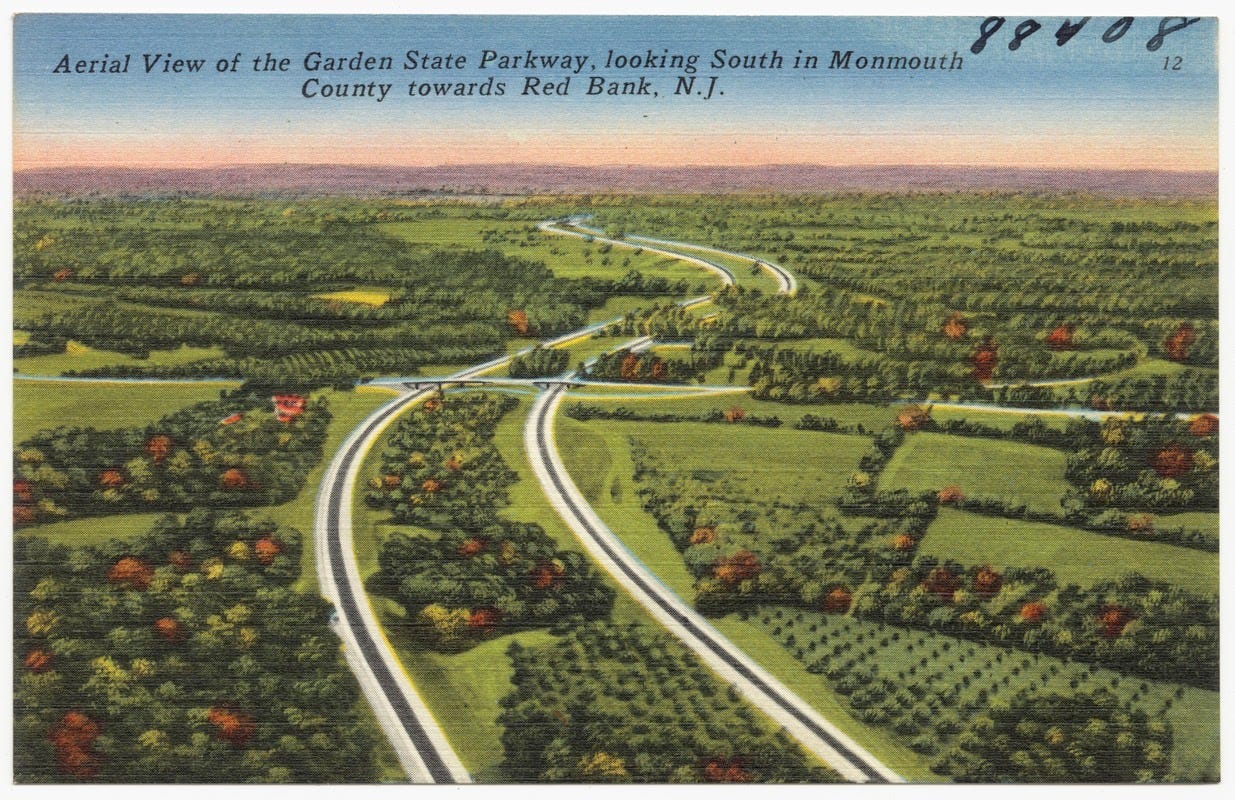
Construction had started two years earlier on the Garden State Parkway, the road that would ultimately run 172 miles from the New York state border in the north to the tip of Cape May in the south and forever alter the state’s landscape and character.
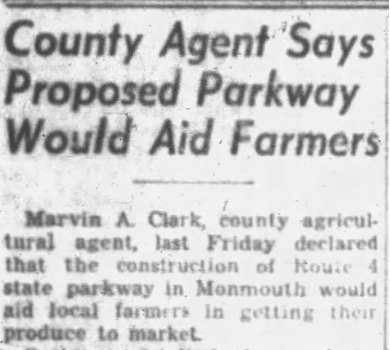
Maybe at first – especially all the truck farms and orchards that grew the vegetables and fruits sold in New York City and Philadelphia. But as the new highway cut through the county’s farmland it would open so much new territory to development that later generations would wonder how it acquired its bucolic name.
Two seasons important to the life of the town ended in September:
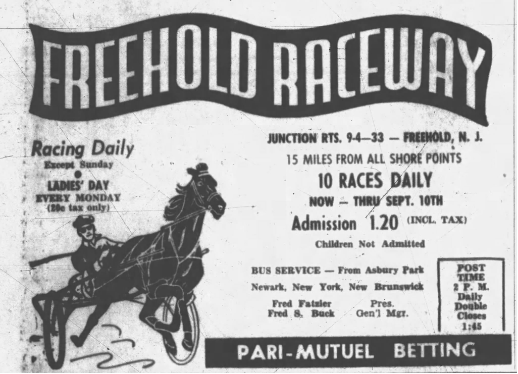
The annual harness meet at Freehold Raceway, where horses had been racing since before the Civil War, and the baseball season of the town team in the Jersey Shore Baseball League, which drew hundreds of people every Sunday afternoon to Lincoln Field, a block from Bruce’s home. In the next to last game of the season, the Gulistans – named for the premier rug brand woven at the mill on Jackson Street, and led by Bruce’s cousin Dave “Dim” Cashion – were still hoping to make the league playoffs.
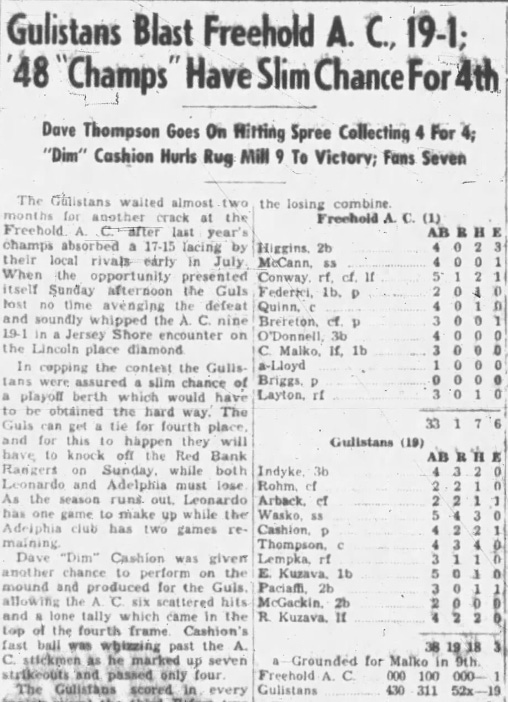
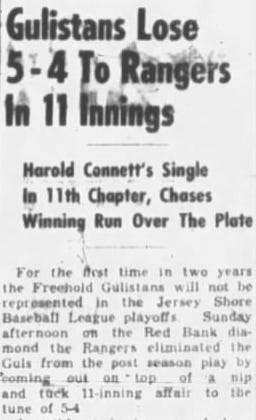
In that blowout “Cashion’s fast ball was whizzing past the A.C. stickmen as he marked up seven strikeouts and passed only four.” The next Sunday he hit a home run over the left field fence, but it wasn’t enough:
Crowds came to watch the games at Lincoln Field because they couldn’t watch major league games on television yet. TV was in its infancy, programming was limited, and sets were expensive.
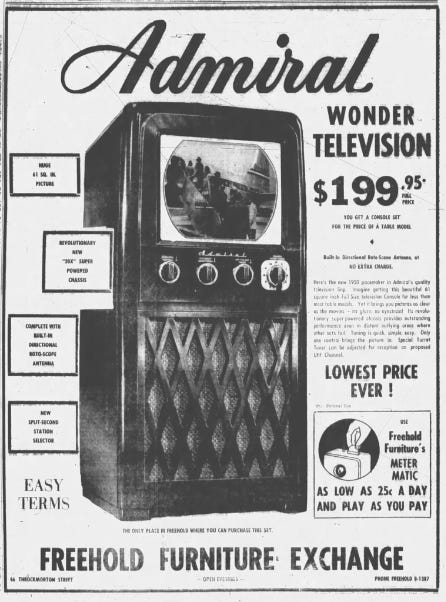
That was a big-ticket item at a time when the median family income in the United States was $3,100. Which is why people went to the movies at the two theaters on Main Street – so often that the theaters changed the movies every other day. The Liberty, the second-run theater, aimed its Wednesday nights at a Black audience, including vaudeville acts “direct from Harlem.”
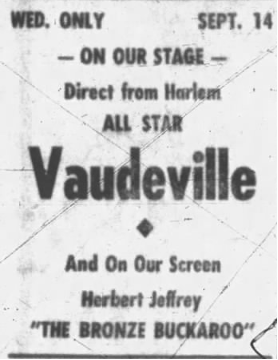
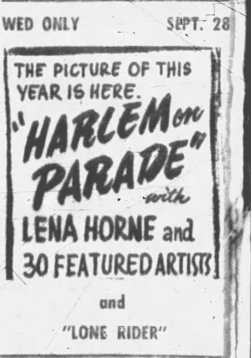
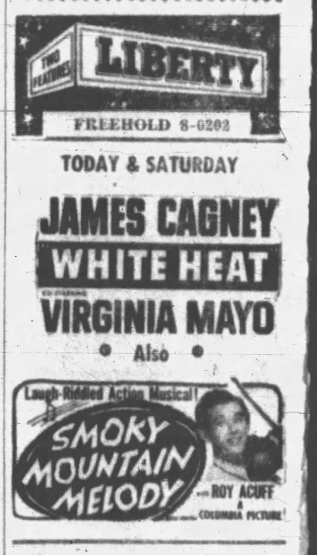
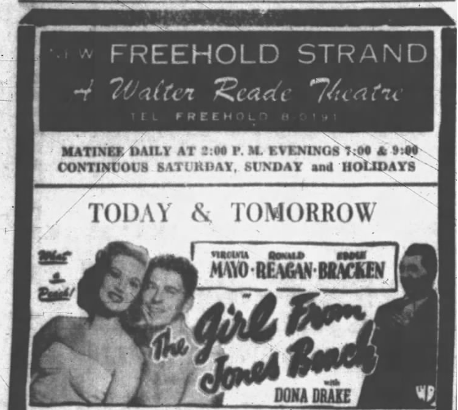
On the day Bruce was born, Virginia Mayo was on screen in both theaters. At the Strand, next door to the courthouse, she was being pursued by Ronald Reagan in “The Girl from Jones Beach.”
At the Liberty, down by the train station, she was the wife of the killer played by Jimmy Cagney. “Made it, Ma!” Cagney shouts from the top of the gas tank where police have surrounded him in the movie’s indelible fiery climax. “Top of the World!”